Location
97 to 128 of 268 results
-
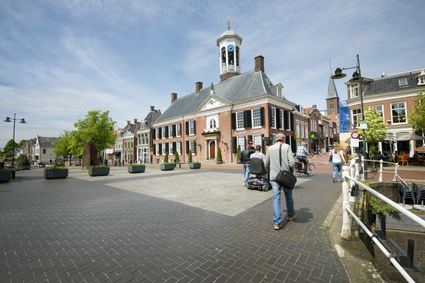
Café-Restaurant ’t Raedhûs
Café-Restaurant ’t Raedhûs Dokkum
-
The Spitkeet
The Spitkeet Harkema
-
City Brewery and Bonifatius754 Museum
City Brewery and Bonifatius754 Museum Dokkum
-
De Kruisweg
De Kruisweg Damwâld
-
Koffiebar Knus
Koffiebar Knus Dokkum
-
Suvelfabryk
Suvelfabryk Lioessens
-
Landal Esonstad
Landal Esonstad Anjum
-
Paviljoen De Leyen
Paviljoen De Leyen Rottevalle
-
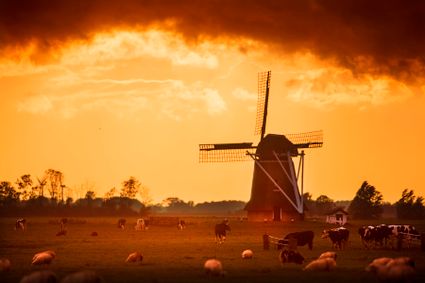
Ypeymolen
Ypeymolen Ryptsjerk
-
The bombing of Terherne lock
On 11 November 1944, pilots of the Royal Canadian Air Force, based at Welschap airfield near Eindhoven, were ordered to bomb the lock at Terherne in two groups. The reason for the bombardment of Terherne lock was to restrict (German) transport movements. The lock complex was situated on the main shipping route from Germany via Groningen to the Randstad, along which the Germans transported goods and military equipment.
After the railway strike in September had already disrupted rail transport considerably, actions against shipping traffic followed in the months thereafter. The southern part of the country may have been liberated, but fierce battles were still to be fought in the other parts.
Such was the case on that 11th November just after nine o'clock in the morning when the two groups of Hawker Typhoon fighter-bombers took off shortly after each other from Eindhoven for their mission. Around 10:00, the lock at Terherne was bombed from the north for the first time and then again around 10:30.
The consequences were huge for the people living on the lock. The wives of both lock keepers, a one-year-old baby and a German soldier were killed. Also, pilot John Gordon Fraser's aircraft was damaged to such extent that he had to make an emergency landing at St. Johannesga. Although the bombing resulted in the northern passageway being deactivated and no longer usable, the southern passageway remained open and could still be used.
Today, a boathouse for the State yacht of the province of Friesland has been built over the southern passage. A new building, that serves as a guest house for the province, was put up on the site of the lock keeper's house on the south side.
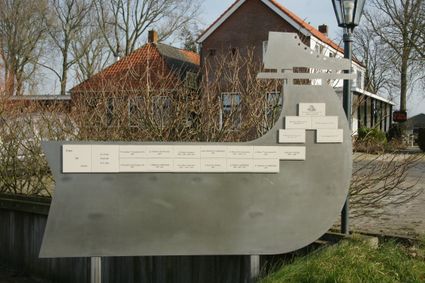
A monument has been erected on the northern pier in memory of those who perished at the lock. This monument was unveiled on 10 November 1985 by Hattum Hoekstra, son of 1st lock keeper Wiemer and Tietje Hoekstra. Since then, the commemoration of the dead in Terherne has always taken place at the old lock, and the children of primary school 'It Kampke' have adopted the monument.
Terherne
-
It Wiid Bathing Site and Water Playground
It Wiid Bathing Site and Water Playground Earnewâld
-
Sneek (Snits)
Sneek (Snits) Sneek
-
Noarderleech Bunker and Training Base
Noarderleech Bunker and Training Base Hallum
-
Gast op stal
Gast op stal Wijns
-
Tourist Information Earnewâld
Tourist Information Earnewâld Earnewâld
-
De Leijen Beach
De Leijen Beach Rottevalle
-
B&B De Hoffstee
B&B De Hoffstee Minnertsga
-
Skrok - Bird hide
Skrok - Bird hide Wommels
-
Camperplaces en cabins LauwersmeerPlezier!
Camperplaces en cabins LauwersmeerPlezier! Lauwersoog
-
The liberation of Friesland
By 18 April, the whole province of Friesland had been liberated, except for the Wadden Islands. Compared to other provinces, there was little fighting in Friesland. Overall, the few thousand German troops who had been unable to escape from Friesland were defeated by the Canadians relatively quickly.
The commander of the Royal Canadian Dragoons, Lieutenant Colonel Landell, praised the actions of the resistance by stating that "Friesland liberated herself". While that may be a bit of an exaggeration, the actions of the Frisian resistance undoubtedly accelerated the liberation. And reduced the number of casualties on the Allied side.
At least 31 resistance fighters lost their lives in confrontations with German troops and their Dutch accomplices. At least eleven Canadians and one Frenchman were killed on the Allied side. Dozens of civilian victims were also killed in the fighting and shelling. The number of casualties on the German side is not known, but it is believed that the number ran into hundreds. With 320 destroyed and 4000 damaged homes and 80 destroyed bridges, Friesland was materially the least damaged province of the Netherlands.
Many German soldiers fled towards the western part of the country. The retreating German troops gathered mostly in Harlingen, Makkum and Lemmer. From there, they tried to get away by boat across the IJsselmeer or via the Afsluitdijk to North Holland. The Wadden Islands also became a refuge for collaborators and German soldiers. Here, liberation was longer in coming.
On the island of Terschelling, the last German troops were disarmed by a British artillery regiment on 29 May. Two days later, the British crossed from Terschelling to Vlieland, and the liberation of that island was also a fact. Ameland was liberated on 3 June.
Personnel from the infamous Scholtenhuis, the SD headquarters in Groningen, had entrenched themselves on Schiermonnikoog. After their departure on 31 May, there was a celebration on the island, in spite of the six hundred members of the occupying troops who still were there. Only on 11 June did the last German soldiers leave Schiermonnikoog, and then the whole province of Friesland was free.
Most Canadian units that had liberated Friesland continued the battle in Groningen and North Germany after 18 April. Their war ended on 8 May 1945, when the surrender of all German armed forces became effective.
Eanjum
-
B&B The Wee White Hoose
B&B The Wee White Hoose Oosternijkerk
-
Franeker (Frjentsjer)
Franeker (Frjentsjer) Franeker
-
De Bolstienpleats
De Bolstienpleats Aalsum
-
Holiday home Blomsteech
Holiday home Blomsteech Holwert
-
Village Garden Snakkerburen
Village Garden Snakkerburen Snakkerburen
-
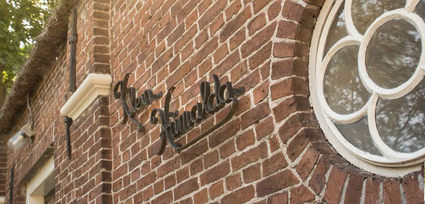
Klein Humalda
Klein Humalda Ee
-
Holwerterpolder at Noard Fryslân Butendyks Nature Reserve
Holwerterpolder at Noard Fryslân Butendyks Nature Reserve Holwerd
-
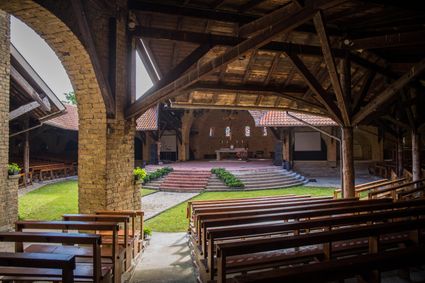
St Boniface Chapel
St Boniface Chapel Dokkum
-
Bonkevaart - Elfstedentocht Finish Line
Bonkevaart - Elfstedentocht Finish Line Leeuwarden
-
Tour de Wadden
Tour de Wadden Lauwersoog
-
Rinsma State Country House and Estate
Rinsma State Country House and Estate Driezum
-
Headmaster Jakob Klok in the resistance
During the war, Jakob (Jaap) Klok ended up in the resistance in Dantumadeel, where he played an important role. At the time, he lived with his wife and four children in Akkerwoude, where he was headmaster of the school at Hearewei 13. He stayed there until 1947 and will always be remembered as "Headmaster Klok."
Jaap Klok was active socially and in politics as a member of the Dutch Social Democratic Labour Party (SDAP). When party meetings were banned by the German occupiers, Jaap imperceptibly became ever more involved in resistance activities. He passed on party information, distributed illegal newspapers, and looked for addresses for people in hiding. Jaap Klok joined the LO, the National Organisation for Aid to people in Hiding, and became the Akkerwoude village commander.
Although people did not know exactly what he did, it was known that he was in the resistance. Despite the fact that his name circulated among NSB members, he decided not to go into hiding, but instead tried to be even more careful and to sleep at home more often than not.
As the war drew to a close, Jaap became very busy. The Dutch government in exile was calling on railway workers to go on strike. The resistance arranged for the hiding. On 15 December 1944, a group of about sixty refugees from Arnhem arrived at his school. Jaap was indirectly involved in the evacuation committee, which was looking for addresses for the unfortunate Arnhem residents.
Shortly thereafter, he was warned at the schoolhouse that during a raid in Murmerwoude, explicit questions were asked about schoolmaster Klok. Jaap did not hesitate a second and quickly left the house. And not a moment too soon, as ten minutes after his departure the Germans were already on his doorstep. From that moment on, Jaap knew that he had to be very careful. He hardly ever slept at home anymore.
From January 1945 onwards, the situation became explosive. After the discovery of weapons on a farm in Aalsum, the Germans became fanatical. They relentlessly hunted down resistance fighters and used any means to make those who were caught talk. The name "Jaap Klok" was also mentioned during these interrogations. Sufficient reason to leave then and there, with his whole family. The children stayed with relatives. He and his wife went into hiding elsewhere.
During the last weeks of the war, Jaap was very busy. Much had to be organised and discussed within the resistance to expel the Germans and prepare for the arrival of the Canadians. Just before Dantumadeel was liberated, the inhabitants were already beside themselves with joy. They raised the flag and took to the streets en masse to celebrate. Because of his resistance work, Jaap knew exactly what the situation was with regard to the liberation. He climbed onto the balcony of the town hall and addressed the people. After all, the danger had not yet passed. Even when that was the case shortly thereafter, he ensured that peace was maintained among the population of Dantumadeel and thus prevented the molestation of a number of NSB members.
After the war, he held many administrative positions in the province of Friesland. In 1984, Jaap Klok died at the age of 91. Fifteen years later, a statue of him was erected in Akkerwoude, which was then called Damwoude, as a tribute.
From the book "De oorlog een gezicht geven" (deel 6) – Dantumadeel in de periode '40 - '45 by Yvonne te Nijenhuis and Reinder H. Postma
Damwald