Location
193 to 224 of 281 results
-
De Zomerschuur (The Summer Barn)
De Zomerschuur (The Summer Barn)
-
Camping de Kleine Wielen
Camping de Kleine Wielen
-
Tollboot "It Driezumer Tolhús" near Dokkum
Tollboot "It Driezumer Tolhús" near Dokkum
-
it Dreamlân family house
it Dreamlân family house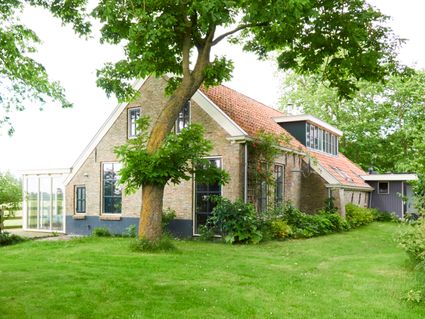
Direct boekbaar
-
National Park 'Lauwersmeer'
National Park 'Lauwersmeer'
-
St Boniface Chapel
St Boniface Chapel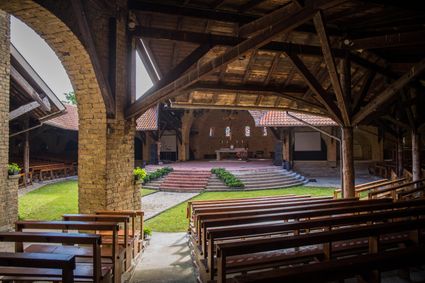
-
Franeker (Frjentsjer)
Franeker (Frjentsjer)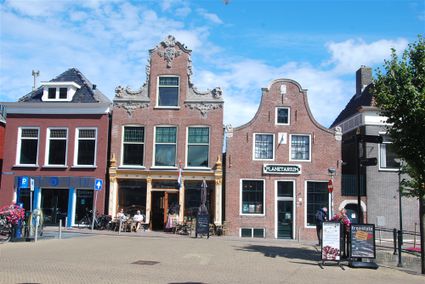
-
Alde Feanen Rentals
Alde Feanen Rentals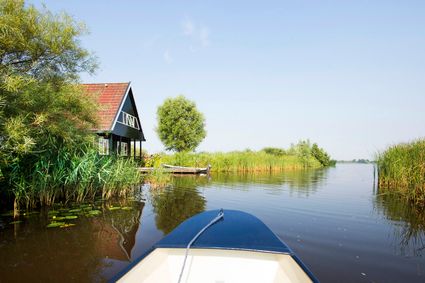
Tip
-
Seventy evacuees from Arnhem and Limburg
Seventy evacuees from Arnhem and Limburg
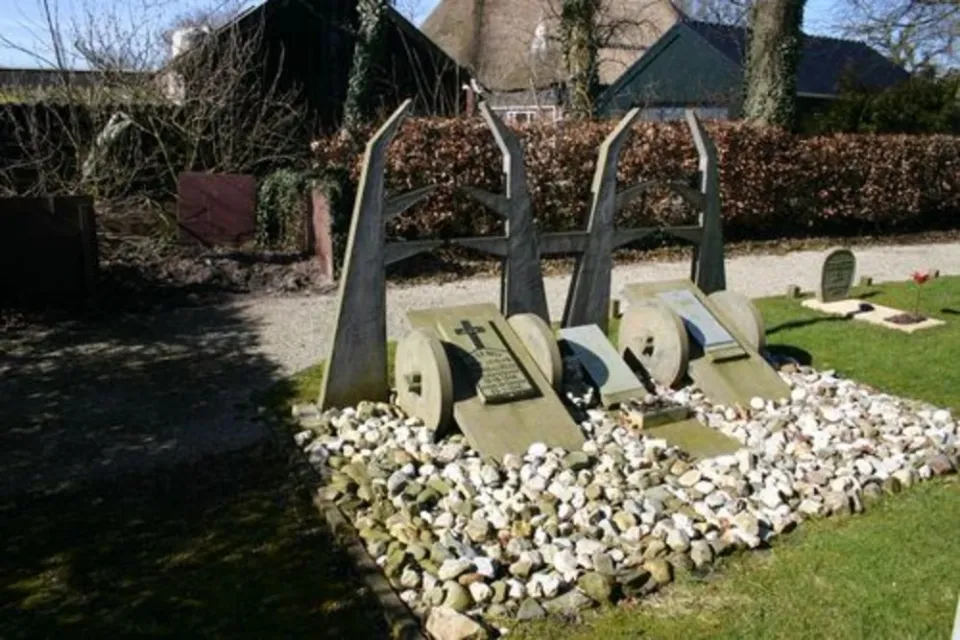
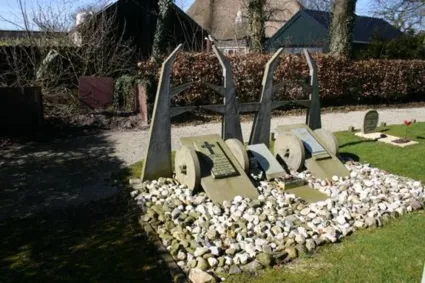
The grave monument in Gytsjerkwas erected in memory of Maria v/d Heuij. Maria was one of seventy evacuees from Arnhem and Limburg who arrived in Gytsjerk on 22 January 1945. Maria died a day later, just a few months old. The harsh conditions during the trip had proved fatal to her. Maria did not live to see the liberation. Fortunately, many of the other evacuees with whom she undertook the journey did.
Symbolism
The monument's spiritual father, artist Klaas Bokma, chose two carts because this was the means of transport often used by evacuees. The four withered trees symbolise death. The cross is not only a symbol of the Christian faith, but also a reminder of the sacrifice made by war victims for a life of freedom.
The oldest pupils of Ichtus and Thrimwalda primary schools take care of this monument.
-
-
In De Wij
In De Wij
-
Schwarzenbergerbos Forest
Schwarzenbergerbos Forest
-
To B or not to B
To B or not to B
-
11Fountains Dokkum
11Fountains Dokkum
-
Bungalowpark It Wiid
Bungalowpark It Wiid
-
Timpelsteed
Timpelsteed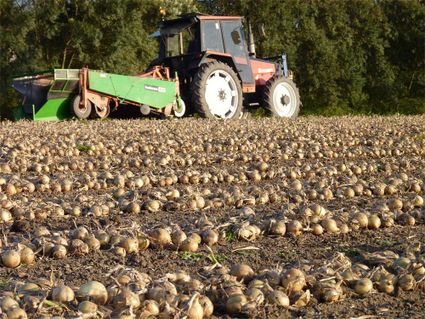
-
Holiday Cottage It Koaiûs
Holiday Cottage It Koaiûs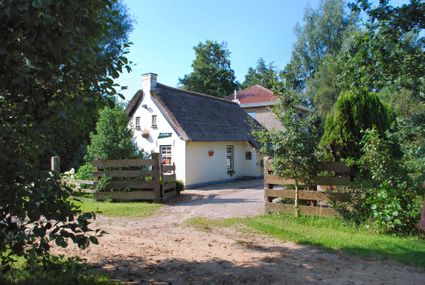
-
Anne-Famkes Pleats Room
Anne-Famkes Pleats Room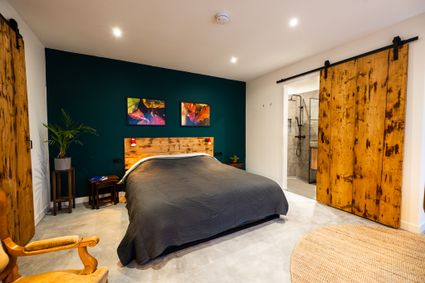
-
Zeilschip Middelsee
Zeilschip Middelsee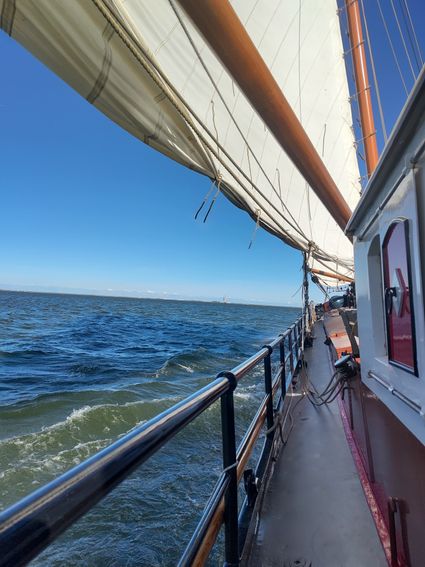
-
Memorial stone for Fallen Canadians
Memorial stone for Fallen Canadians
Sunday 15 April 1945, Friesland's official liberation day, was also the day Sneek welcomed the Canadian liberation forces. It had been an exciting day, and the Dutch Domestic Armed Forces (NBS) had fought quite a battle with the occupiers.
A day earlier, German troops had begun to withdraw from Sneek and the NBS had tried to hinder their retreat along the Leeuwarderweg as much as possible. Until a column of German parachute troops had entered the fray and forced the NBS to retreat.
The Waag building in the middle of the city centre was used as a weapons cache by the occupying forces during the war. To prevent it from falling into Allied hands, the fleeing troops set it on fire at around three o'clock on Sunday. Loud explosions and bangs resounded throughout the city for half an hour.
Once the enemy had left the city, the NBS operatives gathered at the HBS school for instructions and the distribution of weapons and armbands. They went into the city to round up traitors. Then, rumour had it that hundreds of German soldiers were on their way to Sneek from Lemmer. Immediately, fortifications were built at the Water gate.
Canadian units were alerted. They were now in possession of the latest defence plans for Sneek thanks to NBS intelligence and were advancing from Joure towards the town.
In the evening around half past seven, the first patrol of the Canadian infantry battalion Le régiment De La Chaudière rode into town with flame-throwers and machine guns. The German troops stayed away, and the full Canadian battalion followed.
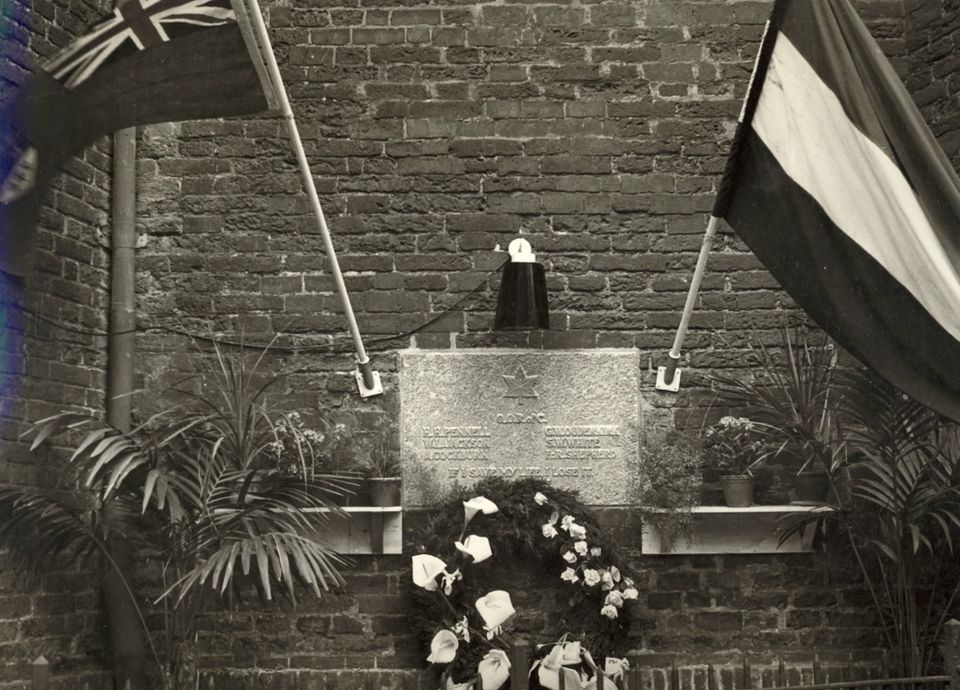
Sneek was liberated, but freedom was not yet guaranteed as German troops tried to escape via the Afsluitdijk towards Friesland. The Canadian Regiment of the Queens Own Rifles moved through Sneek to the Afsluitdijk and fiercely fought at Wons. Six Canadian soldiers were killed. They were temporarily buried at Sneek General Cemetery. In 1946, they were reburied at the Canadian Field of Honour in Holten.
Canadian guests
While waiting to return to their homeland, hundreds of Canadian soldiers were lodged with families in Sneek for about five months. On 1 June, the Perth Regiment arrived in the town, which they temporarily renamed Stratford. They were involved in the liberation of Groningen. A committee was set up to entertain the soldiers with various activities. From dances to sailing competitions and special church services.Cordial ties developed between the liberators and the people of Sneek. And sometimes more than that. For Gordon C. Compton and Atty Bouma, one could even speak of "love at first sight". When the last soldiers return home at the end of November, Gordon decided to stay in the Netherlands. On 9 May 1946, he married Atty in Sneek. Not long after, Gordon and his "war bride" left for Canada.
Several monuments in the city recall the special bond with the Canadian military, which remains very close to this day.
-
-
Jannum Church Museum
Jannum Church Museum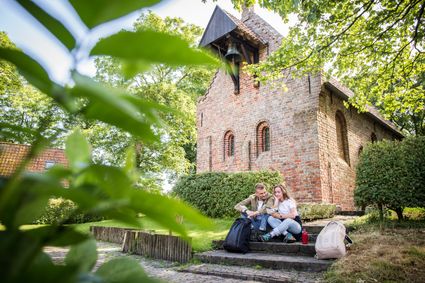
-
Het Raadsel van de Wadden
Het Raadsel van de Wadden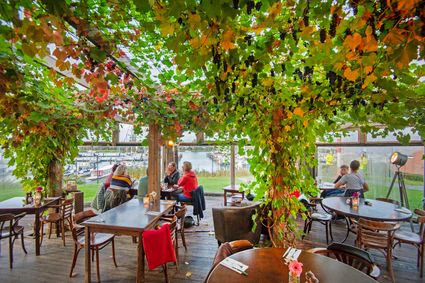
-
Kraanlannen Nature Reserve
Kraanlannen Nature Reserve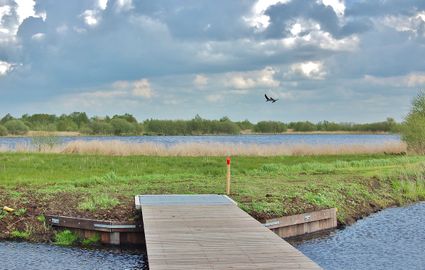
-
Waterdorp Burdaard
Waterdorp Burdaard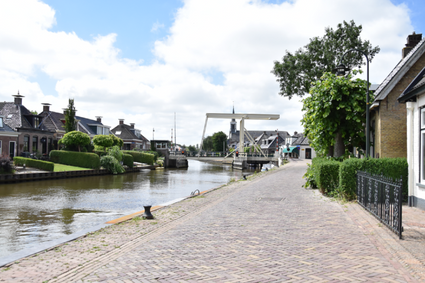
-
Ypeymolen
Ypeymolen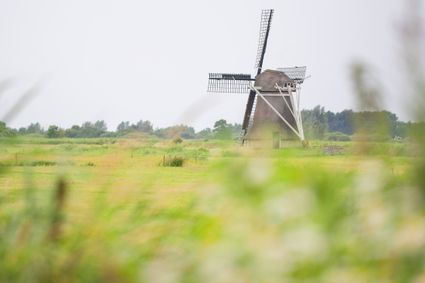
-
Botmas
Botmas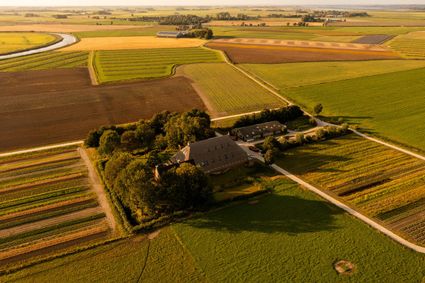
-
Beaches at Lauwersoog
Beaches at Lauwersoog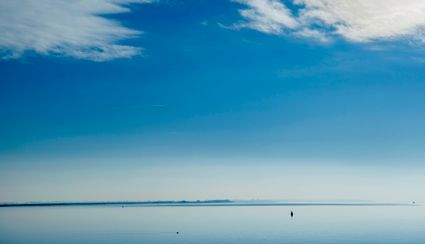
-
Campground Achterom
Campground Achterom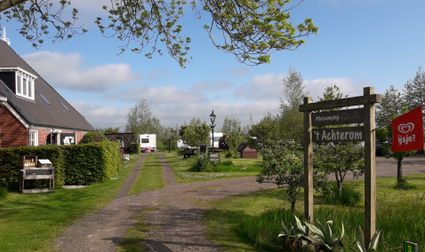
-
Café-Restaurant ’t Raedhûs
Café-Restaurant ’t Raedhûs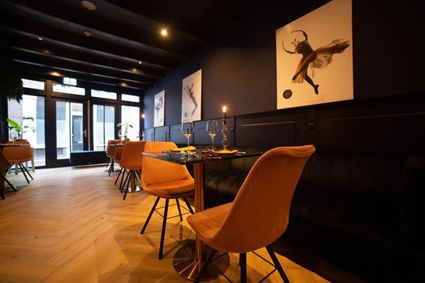
-
St. Paul's Church in Aldtsjerk
St. Paul's Church in Aldtsjerk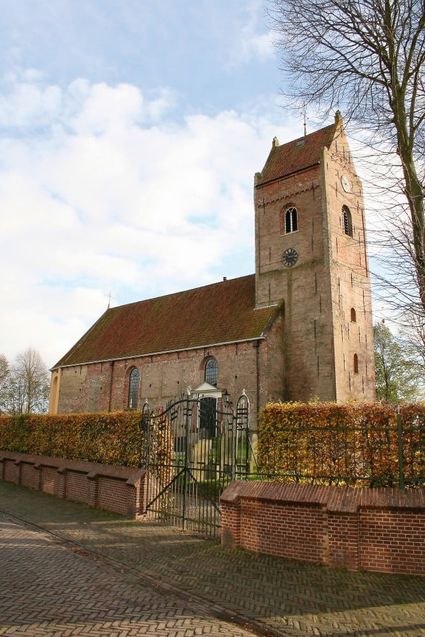
-
Oudebildtdijk Dike
Oudebildtdijk Dike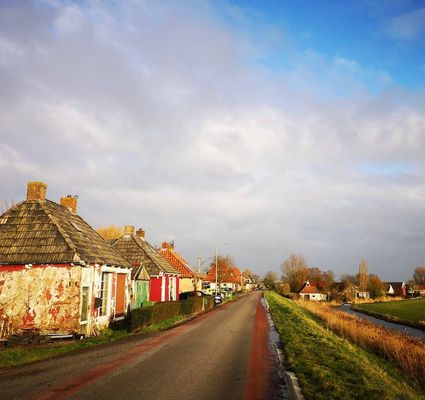
-
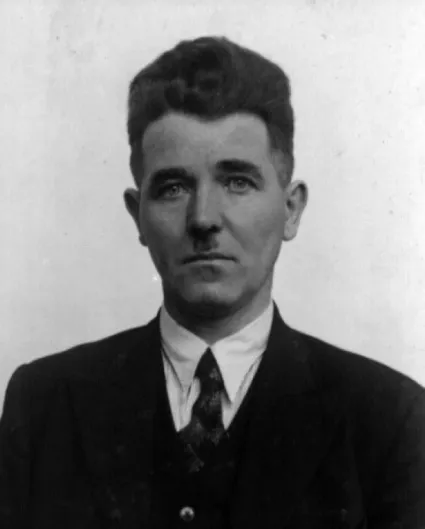
Headmaster Jakob Klok in the resistance
Headmaster Jakob Klok in the resistance
During the war, Jakob (Jaap) Klok ended up in the resistance in Dantumadeel, where he played an important role. At the time, he lived with his wife and four children in Akkerwoude, where he was headmaster of the school at Hearewei 13. He stayed there until 1947 and will always be remembered as "Headmaster Klok."
Jaap Klok was active socially and in politics as a member of the Dutch Social Democratic Labour Party (SDAP). When party meetings were banned by the German occupiers, Jaap imperceptibly became ever more involved in resistance activities. He passed on party information, distributed illegal newspapers, and looked for addresses for people in hiding. Jaap Klok joined the LO, the National Organisation for Aid to people in Hiding, and became the Akkerwoude village commander.
Although people did not know exactly what he did, it was known that he was in the resistance. Despite the fact that his name circulated among NSB members, he decided not to go into hiding, but instead tried to be even more careful and to sleep at home more often than not.
As the war drew to a close, Jaap became very busy. The Dutch government in exile was calling on railway workers to go on strike. The resistance arranged for the hiding. On 15 December 1944, a group of about sixty refugees from Arnhem arrived at his school. Jaap was indirectly involved in the evacuation committee, which was looking for addresses for the unfortunate Arnhem residents.
Shortly thereafter, he was warned at the schoolhouse that during a raid in Murmerwoude, explicit questions were asked about schoolmaster Klok. Jaap did not hesitate a second and quickly left the house. And not a moment too soon, as ten minutes after his departure the Germans were already on his doorstep. From that moment on, Jaap knew that he had to be very careful. He hardly ever slept at home anymore.
From January 1945 onwards, the situation became explosive. After the discovery of weapons on a farm in Aalsum, the Germans became fanatical. They relentlessly hunted down resistance fighters and used any means to make those who were caught talk. The name "Jaap Klok" was also mentioned during these interrogations. Sufficient reason to leave then and there, with his whole family. The children stayed with relatives. He and his wife went into hiding elsewhere.
During the last weeks of the war, Jaap was very busy. Much had to be organised and discussed within the resistance to expel the Germans and prepare for the arrival of the Canadians. Just before Dantumadeel was liberated, the inhabitants were already beside themselves with joy. They raised the flag and took to the streets en masse to celebrate. Because of his resistance work, Jaap knew exactly what the situation was with regard to the liberation. He climbed onto the balcony of the town hall and addressed the people. After all, the danger had not yet passed. Even when that was the case shortly thereafter, he ensured that peace was maintained among the population of Dantumadeel and thus prevented the molestation of a number of NSB members.
After the war, he held many administrative positions in the province of Friesland. In 1984, Jaap Klok died at the age of 91. Fifteen years later, a statue of him was erected in Akkerwoude, which was then called Damwoude, as a tribute.
From the book "De oorlog een gezicht geven" (deel 6) – Dantumadeel in de periode '40 - '45 by Yvonne te Nijenhuis and Reinder H. Postma
-
-
Tour de Wadden
Tour de Wadden