Location
225 to 256 of 285 results
-
Church of Ryptsjerk
Church of Ryptsjerk
-
Landal Esonstad
Landal Esonstad
-
Former home-work house ir. Abe Bonnema
Former home-work house ir. Abe Bonnema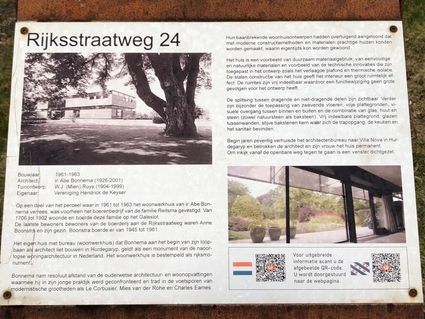
-
B&B Hippe Schuur
B&B Hippe Schuur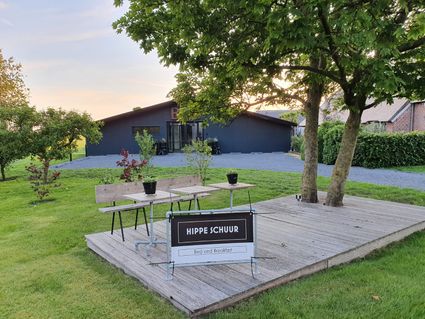
-
De Dikke Draai
De Dikke Draai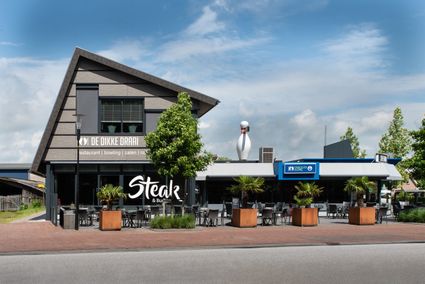
-
The liberation of Leeuwarden
The liberation of Leeuwarden
On 11 April 1945, it became clear that German resistance in the north of the Netherlands was limited. On 12 April, the Allies seized this opportunity to advance on Friesland as quickly as possible. One of the main goals was to liberate Leeuwarden. The 9th Canadian Infantry Brigade was designated for this purpose. But things would turn out differently.
On 12 April, the Royal Canadian Dragoons entered Friesland at Noordwolde. They were to conduct reconnaissance with their armoured vehicles and reach the Wadden Sea as quickly as possible. As a result, the German troops in Friesland and Groningen would be separated.
On the night of 14 to 15 April, three Squadrons of the Dragoons were at Suameer. Burgum could not be reached earlier that day, because the bridge at Burgummerdam had been blown up by the Germans.
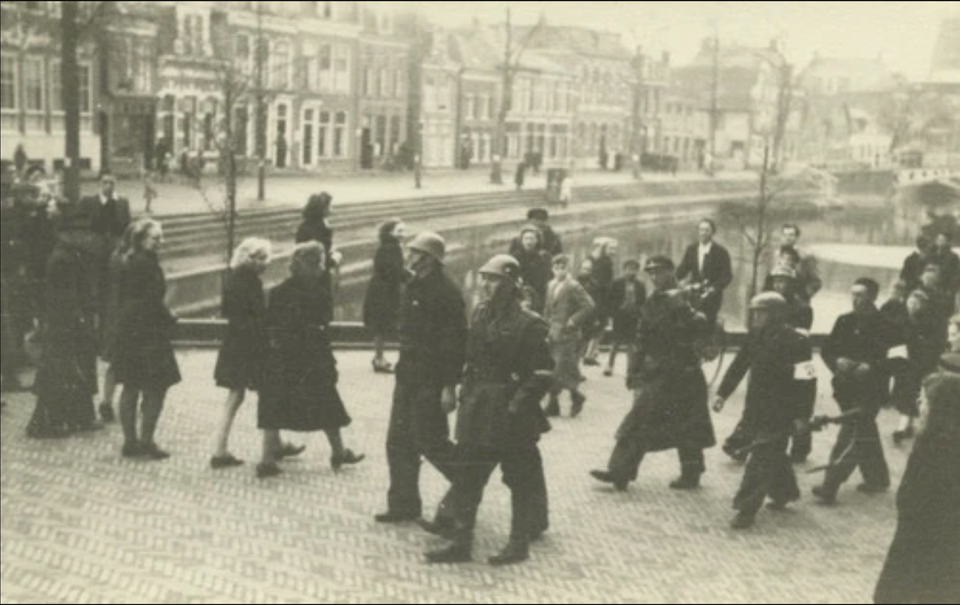
Meanwhile, all sorts of things were happening in nearby Leeuwarden. On 12 April, the airfield had been blown up by the Germans. And they left the city on 14 April. Leeuwarden would not be defended. The Burgerweeshuis (Civil Orphanage) that had housed several German agencies was set on fire. An attempt to blow up the telephone exchange failed due to an ingenious intervention by the resistance. In the early morning of 15 April, the resistance also took to the streets en masse to occupy important points and to capture Germans who had remained behind.
The Dragoons in Suameer were in contact with the resistance in Leeuwarden. Due to various reports, it was unclear whether there was now heavy fighting in Leeuwarden or whether the Germans had left the city completely. Because the Germans had blown up important bridges on the route from Heerenveen to Leeuwarden, the infantry could not quickly provide assistance.
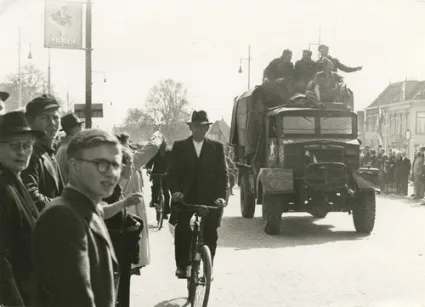
So, the Dragoons went to take a look for themselves. Initially, a patrol of four vehicles was sent via the Groningerstraatweg into the city around half past eleven. One of the Canadians in those vehicles recorded the following:
"As we entered the city, passing through the concrete barrier by the narrow passageway left for normal traffic, we were met by an almost hysterical patrol of Resistance men [...] In a few moments the news of our arrival had spread through the city, and we were given a fantastic welcome as we rolled slowly forward into the centre of town."A resident of Leeuwarden recalled:
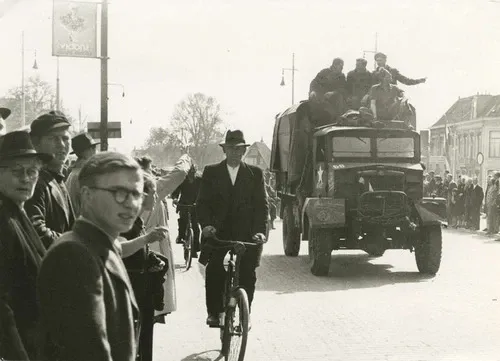
"We lived close to the Groningerstraatweg, where our liberators passed. Many hundreds of us stood there, all happy spectators. All of a sudden, two ladies from the row flung themselves forward and threw their arms around the Canadians' necks, saying: "Oh darlings, you’re here at last!"After the patrol determined that the coast was clear, the entire C Squadron, a detachment of the Royal Canadian Engineers and Regimental Headquarters of Lieutenant-Colonel Landell followed. Leeuwarden had been liberated. After this, thousands took to the streets. One of the Canadians wrote:
"We halted, and were immediately surrounded by laughing, yelling mobs of people, bringing flowers to give to us, and cheering every move. The Resistance men were everywhere, doing their best to keep the people within bounds and off the cars, but their efforts were hardly necessary. I never saw a more satisfying gathering in my life."Leeuwarden had been liberated by the Dragoons through unexpected circumstances. On the night of 15 to 16 April, Canadian infantry moved into the city.
-
-
Terp fan de Takomst
Terp fan de Takomst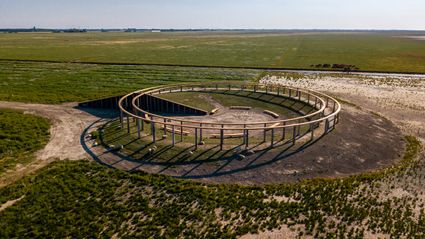
-
Statue of Tryntsje and her seven sons
Statue of Tryntsje and her seven sons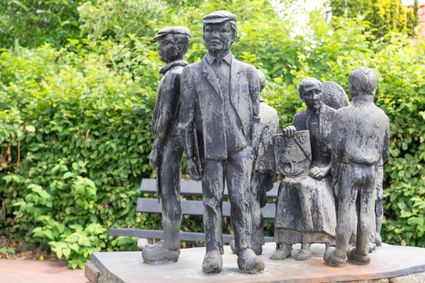
-
Sint Willibrorduskerk
Sint Willibrorduskerk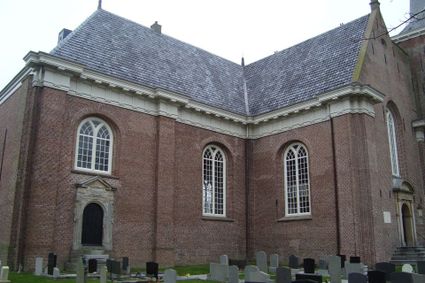
-
Pancake train
Pancake train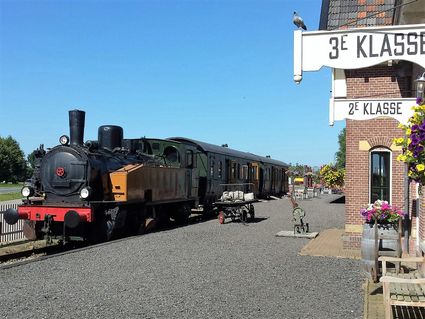
-
Landal Waterpark De Alde Feanen
Landal Waterpark De Alde Feanen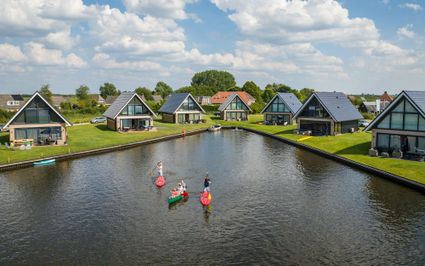
-
Grou
Grou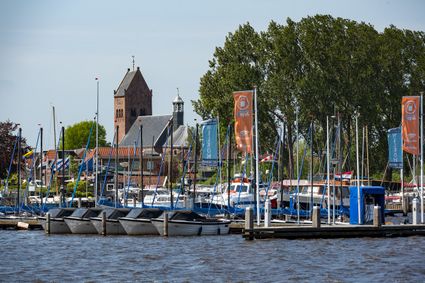
-
Gasthuis Dokkum
Gasthuis Dokkum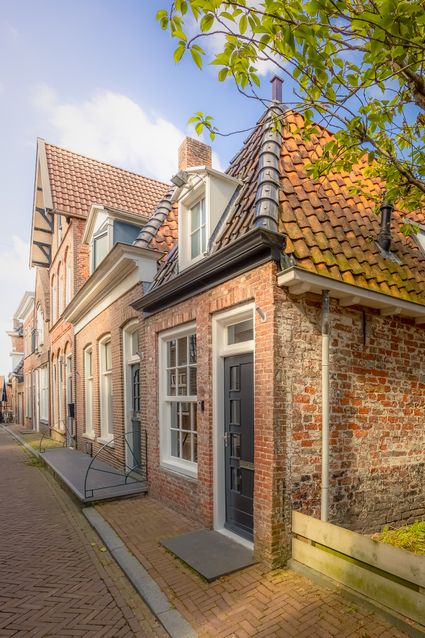
-
Soestpolder Nature Reserve
Soestpolder Nature Reserve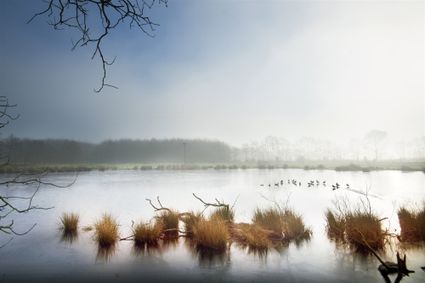
-
Reformed Church (Hofkerk)
Reformed Church (Hofkerk)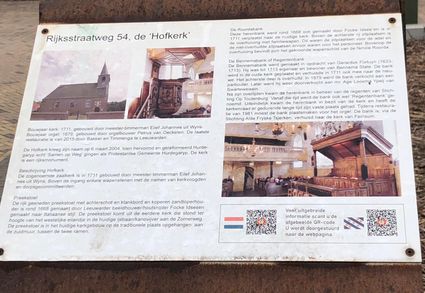
-
Schwarzenbergerbos Forest
Schwarzenbergerbos Forest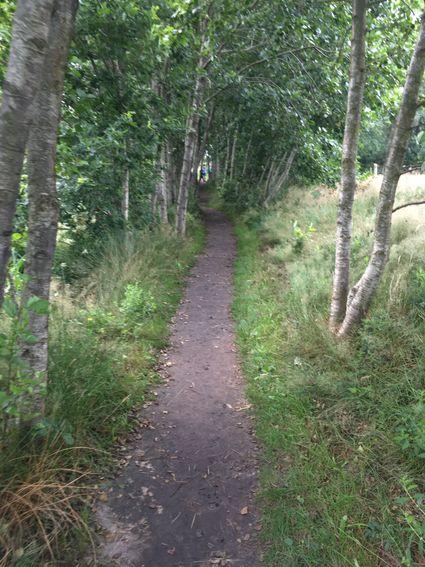
-
LAUWERSOOG CAMPSITE AND RECREATION CENTRE
LAUWERSOOG CAMPSITE AND RECREATION CENTRE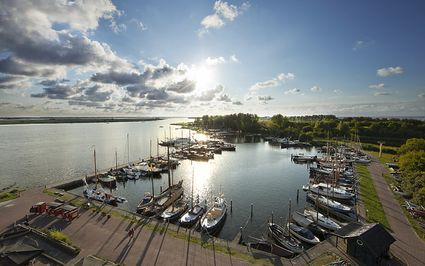
-
Beleef Lauwersoog
Beleef Lauwersoog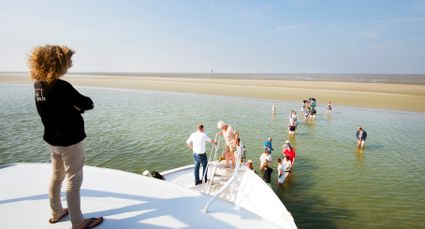
-
Visitor's Center 'Terp Hegebeintum'
Visitor's Center 'Terp Hegebeintum'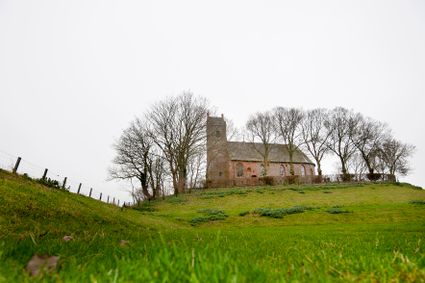
-
Old Town Hall in Dokkum
Old Town Hall in Dokkum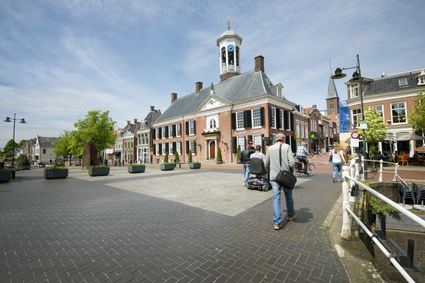
-
De Naturij
De Naturij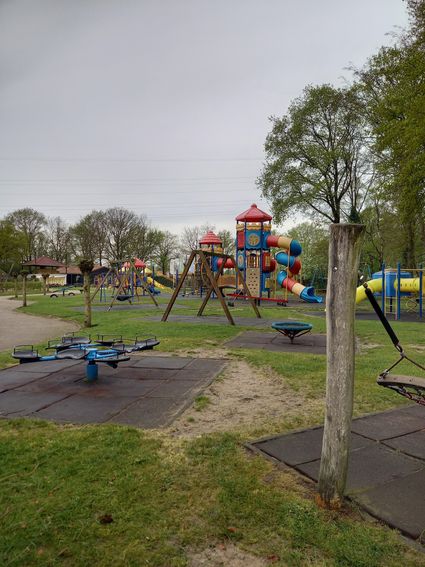
-
Dobben Hurdegarypsterwarren Nature Reserve
Dobben Hurdegarypsterwarren Nature Reserve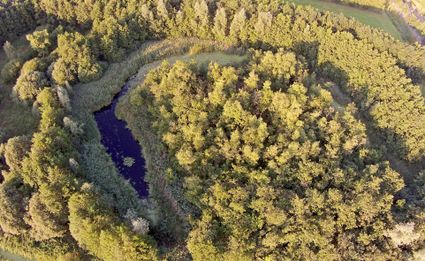
-
Eeltsjemar Lake Beach
Eeltsjemar Lake Beach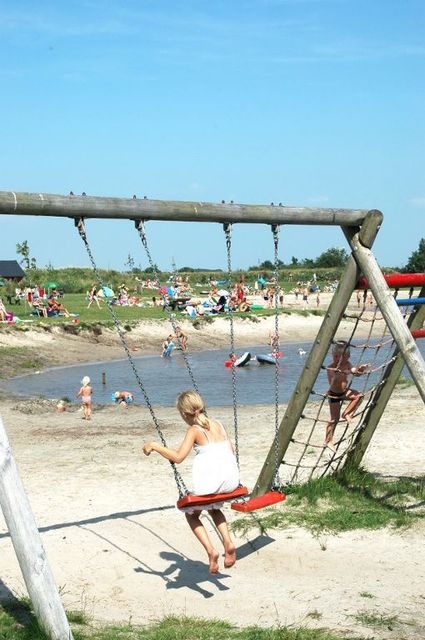
-
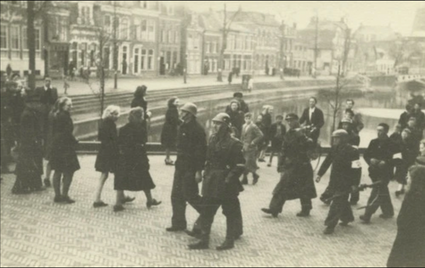
The liberation of Friesland 1
The liberation of Friesland 1
In early April, it became clear that the liberation of Friesland was imminent. Although the province had not suffered a real Hunger Winter like other parts of the Netherlands, there were severe shortages of just about everything. And the terror of the occupying forces was growing. This also led to increased resistance against the occupying forces. The battle between the two was tougher than ever in early 1945.
In Friesland, assault groups known as Knokploegen (KP) were responsible for most acts of resistance. But there were other groups too. On the orders of the Dutch government in London, all these groups were merged into the Dutch Domestic Armed Forces (NBS). In Friesland, this happened on 12 December 1944.
The NBS, popularly referred to as the BS, gave the armed resistance an organisation with a clear structure. The NBS was also supposed to play a role in the upcoming liberation. To this end, resistance groups were provided with weapons from autumn 1944. These were dropped from the air.
On 8 April, Radio Orange broadcast the message "The bottle is empty." This was the signal for the NBS to start carrying out sabotage operations 36 hours later. The aim was to make it as difficult as possible for the Germans to defend themselves against the approaching Allied forces.
The resistance did this by putting bridges and railways out of order, blocking waterways and blocking roads. The response of the occupying forces was ruthless. In retaliation, dozens more prisoners were shot at different times and places.Once the Canadians entered Friesland on 12 April, they were supported extremely effectively by the Frisian resistance. Because it was superbly organised, they were able to help the Canadians take control of important bridges, repair damaged bridges, and advise on the most favourable route.
By 18 April, the whole province was liberated except for the Wadden Islands (these were liberated in late May and in June). Compared to other provinces, there was little fighting in Friesland. Overall, the few thousand German troops who had been unable to flee Friesland were defeated by the Canadians relatively quickly.
The commander of the Royal Canadian Dragoons, Lieutenant Colonel Landell, praised the actions of the resistance by stating "Friesland liberated herself." While that may be a bit of an exaggeration, the actions of the Frisian resistance undoubtedly accelerated the liberation. And reduced the number of casualties on the Allied side.
In confrontations with German troops and their Dutch accomplices, at least 31 resistance fighters lost their lives. On the Allied side, at least eleven Canadians and one Frenchman were killed. The fighting and shelling also resulted in dozens of civilian casualties. The number of casualties on the German side is not known, but probably ran into the hundreds. With 320 houses destroyed and 4,000 damaged and 80 bridges destroyed, Friesland was materially the least damaged province in the Netherlands.
-
-
Bij De Pastorie Boutique Hotel
Bij De Pastorie Boutique Hotel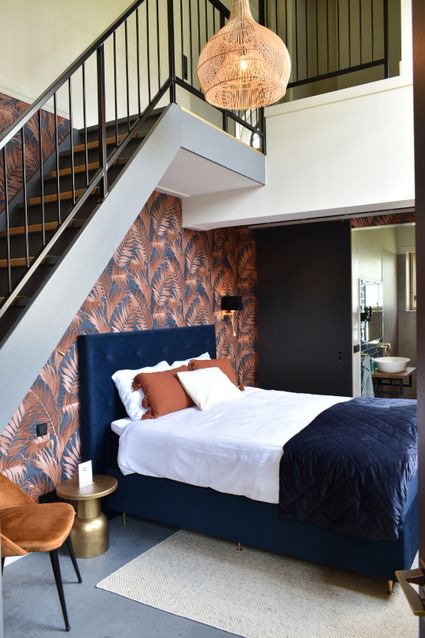
-
Attack on the port of Oostmahorn
Attack on the port of Oostmahorn
The liberation of the north-eastern part of Friesland was not achieved without a struggle. The Dutch Domestic Armed Forces (NBS) and Canadian troops fought fierce battles, partly side by side. It was mainly occupiers fleeing in panic who caused fights and shootings that claimed victims on both sides. A fierce battle was also fought over the port of Oostmahorn.
After the liberation of Dokkum, Kollum and Dokkumer Nieuwe Zijlen, the attention of the Canadian troops turned to the port of Oostmahorn. It was the gateway to the island of Schiermonnikoog, which was part of the German defence line, the Atlantic Wall. This bulwark ran along the coasts of France to Norway. During the war, and extensive occupying force was stationed on the Wadden Island.
The village of Oostmahorn was "relieved" by the Dutch Domestic Armed Forces (NBS) on Saturday, 14 April, after the German Grenzschutz (border control) left in silence for Schiermonnikoog. Meanwhile, a group of more than a hundred fleeing SS and SD men and a dozen women crossed the Lauwerszee from Groningen near Zoutkamp with three boats to the island. A number of them were high-ranking SD members of the infamous Scholtenhuis in Groningen. When the NBS saw them sailing past from the port of Oostmahorn, shots were fired back and forth.
The German occupying forces on Schiermonnikoog then wanted to take revenge. The village and the port of Oostmahorn were attacked from the island for two hours on Monday, 16 April. A convoy of three Dutch boats left for the port with the aim of landing there. Meanwhile, the help of the B-Squadron of the Royal Canadian Dragoons (1st Armoured Carrier Regiment) in Dokkum had been called in. The attack was narrowly repelled, but two Canadian soldiers from a reconnaissance group were killed. A defence line of foxholes and armoured vehicles was erected around the village.
Further reinforcements were called in that day from Leeuwarden, where C Company of the North Nova Scotia Highlanders were sent to the coastal strip to patrol for German landing attempts.
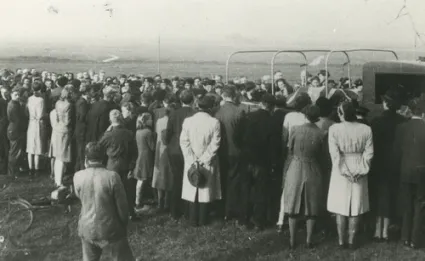
After a brief but heavy shelling from the Canadians as a warning, a mediator was sent to the island the next day. The highest-ranking SD officer refused to surrender. They were waiting for an escape with a Schnell boat that was to take them to the German Wadden island of Borkum on 3 May. That turned out to be in vain, but in the meantime they kept the island occupied, even after the general capitulation of the whole of the Netherlands on 5 May.It was not until 11 June that two boats, the MS Waddenzee and the MS Brakzand, transported the last occupiers of Schiermonnikoog to the port of Oostmahorn. A column of army trucks packed with prisoners of war left the port under the guard of the Allies. From there they went to the POW camp in Beerta (Groningen).
-
-
Holiday Park Bergumermeer
Holiday Park Bergumermeer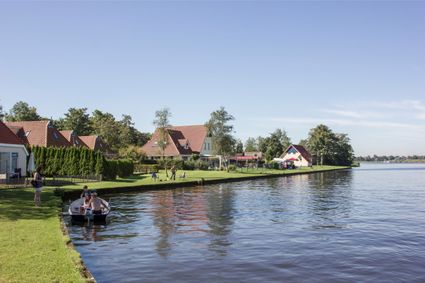
Direct boekbaar
-
Sparkberry
Sparkberry
-
it Dreamlân ecolodge
it Dreamlân ecolodge

Direct boekbaar
-
St. Nicholas Church Blije
St. Nicholas Church Blije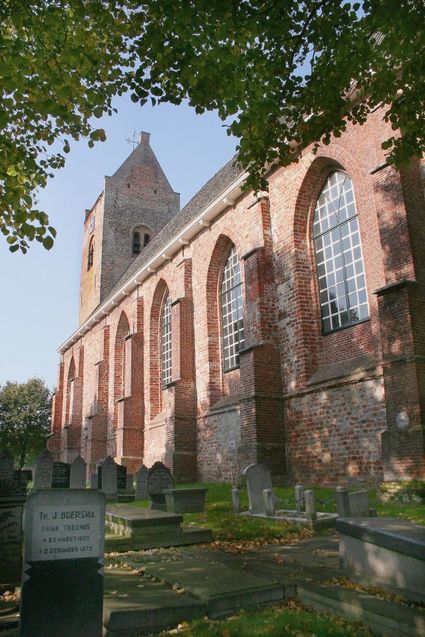
-
Friesland Holland Tourist Information & Travel Service
Friesland Holland Tourist Information & Travel Service
-
Café-Restaurant ’t Raedhûs
Café-Restaurant ’t Raedhûs