Location
97 to 128 of 387 results
-
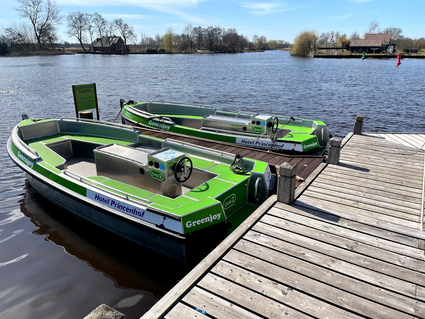
Alde Feanen Rentals
Alde Feanen Rentals Earnewâld
Tip
-
Dobbepaarden photo artwork
Dobbepaarden photo artwork Marrum
-
Walburga Church in Drogeham
Walburga Church in Drogeham Drogeham
-
Botmas
Botmas Engwierum
-
Camping De Stjelp
Camping De Stjelp Oudega
-
Camping de Kleine Wielen
Camping de Kleine Wielen Leeuwarden
-
Accommodatie Claercamp
Accommodatie Claercamp Rinsumageast
-
Eleven Cities Tour sculpture Aukje in Workum
Eleven Cities Tour sculpture Aukje in Workum Workum
-
Eleven Cities Tour sculpture Aukje in Bolsward
Eleven Cities Tour sculpture Aukje in Bolsward Bolsward
-
Heemstra State
Heemstra State Oentsjerk
-
Eleven Cities Tour sculpture De Reedrydster
Eleven Cities Tour sculpture De Reedrydster Kolderwolde
-
Reformed Church Gerkesklooster
Reformed Church Gerkesklooster Gerkesklooster
-
Seventy evacuees from Arnhem and Limburg
The grave monument in Gytsjerkwas erected in memory of Maria v/d Heuij. Maria was one of seventy evacuees from Arnhem and Limburg who arrived in Gytsjerk on 22 January 1945. Maria died a day later, just a few months old. The harsh conditions during the trip had proved fatal to her. Maria did not live to see the liberation. Fortunately, many of the other evacuees with whom she undertook the journey did.
Symbolism
The monument's spiritual father, artist Klaas Bokma, chose two carts because this was the means of transport often used by evacuees. The four withered trees symbolise death. The cross is not only a symbol of the Christian faith, but also a reminder of the sacrifice made by war victims for a life of freedom.
The oldest pupils of Ichtus and Thrimwalda primary schools take care of this monument.
Gytsjerk
-
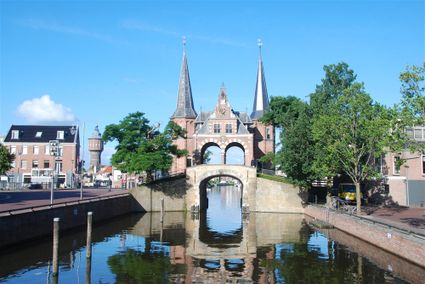
The Waterpoort and the Eleven Cities Tour
The Waterpoort and the Eleven Cities Tour Sneek
-
Thús yn Hantum
Thús yn Hantum Hantum
-
Kollumerwaard Hiking Trail
Kollumerwaard Hiking Trail Kollumerpomp
-
Farm shop Uitland
Farm shop Uitland Buitenpost
-
Kafee It wapen fân Fryslân
Kafee It wapen fân Fryslân Oentsjerk
-
De Groote Wielen
De Groote Wielen Leeuwarden
-
De Jersey Molkerij
De Jersey Molkerij Feankleaster
-
Huize Moddergat
Huize Moddergat Moddergat
-
Tollboot "It Driezumer Tolhús" near Dokkum
Tollboot "It Driezumer Tolhús" near Dokkum Driezum
-
Harkema (De Harkema)
Harkema (De Harkema) Harkema
-
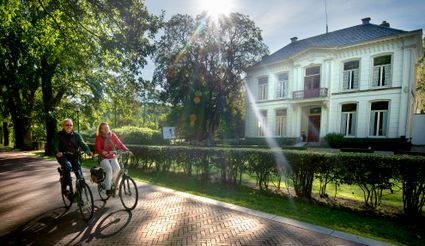
Sytzama House
Sytzama House
What is now a grand café has a history closely connected with local government, the Second World War, and Baron Willem van Sytzama, the building's first owner, after whom it is named.
In Van Sytzama's time, there were very few buildings nearby. Instead, a large landscaped garden with extensive ponds stretched out behind the house. Baron Willem van Sytzama believed he was happily married to Cecilia van Heemskerk, but she left him for another man. Although the baron took legal action in an attempt to prevent the separation, he was unsuccessful. She never returned, and he never remarried. In later years, however, the building served as Kollum's town hall, where hundreds of marriages were celebrated.
During the Second World War, Mayor Gerben Feitsma was sworn into office in this building. The ceremony took place with prominent displays of flags and the Nazi salute. For that reason, Feitsma is often described as an NSB (Dutch National Socialist Movement) mayor. At the same time, there is evidence that he occasionally helped prevent residents of Kollum from being sent to Germany for forced labour by employing them on his farm. Because of his wartime record, his name is not always included in historical accounts.
His brother, Jan Feitsma, became notorious for a different reason. As Prosecutor General, he ordered signs reading "Jews Forbidden" to be displayed throughout the occupied Netherlands. The policy caused considerable controversy in Kollum during the war. The local tennis club preferred to close its courts rather than display such a sign. In early 1945, Jan Feitsma was shot dead by members of the Dutch Resistance. His funeral in Kollum was attended by numerous members of the SS.
Kollum
-
De Roskam
De Roskam
There was a time when Kollum boasted no fewer than sixteen establishments, ranging from pubs and cafés to inns and lodging houses. De Roskam has always been one of them.
Those who remember Kollum in the last century may still picture the signboard of landlord Bonne Hof: a stout little man in swimming trunks with bright red cheeks. According to local tradition, Bonne Hof gathered the sweet flag plants used in his own homemade Kalmus Berenburg from the nearby Alde Swimmer. During the 1950s, Kollum Berenburg was a popular local drink. Another story concerns his father, Sietse Jan, whose croquettes were said to be so delicious that people travelled all the way from Groningen and Leeuwarden to taste them.
Many more colourful stories surround De Roskam. During a German raid in the Second World War, the notary Wassenberg is said to have hidden in the attic, only to crash through the ceiling while still sitting on his chair. Another tale dates from 1952, when the chauffeur of the King's Commissioner, Linthorst Homan, misplaced his cap after spending the night at De Roskam. At first, it was considered a major scandal, and the cap was thought to have been stolen. The commissioner left Kollum in great anger. In the end, however, the cap was simply found and carefully returned by courier by the people of Kollum.
Kollum
-
Thermen & Beauty Leeuwerikhoeve
Thermen & Beauty Leeuwerikhoeve Burgum
-
Landal Esonstad
Landal Esonstad Anjum
-
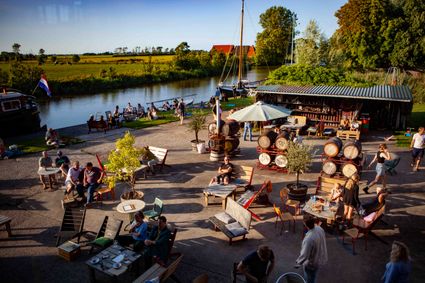
Grutte Pier Brewery
Grutte Pier Brewery Wyns
-
Museum 't Wâldhúske
Museum 't Wâldhúske Houtigehage
-
Wânswert (Wanswerd)
Wânswert (Wanswerd) Wânswert
-
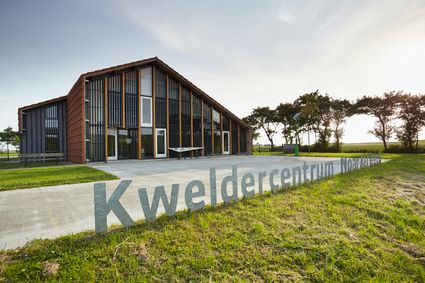
Noarderleech Visitor Centre
Noarderleech Visitor Centre Hallum
-
Oostmahorn Beach and Play Area
Oostmahorn Beach and Play Area Anjum