Location
225 to 256 of 392 results
-
Attack on the port of Oostmahorn
Attack on the port of Oostmahorn
The liberation of the north-eastern part of Friesland was not achieved without a struggle. The Dutch Domestic Armed Forces (NBS) and Canadian troops fought fierce battles, partly side by side. It was mainly occupiers fleeing in panic who caused fights and shootings that claimed victims on both sides. A fierce battle was also fought over the port of Oostmahorn.
After the liberation of Dokkum, Kollum and Dokkumer Nieuwe Zijlen, the attention of the Canadian troops turned to the port of Oostmahorn. It was the gateway to the island of Schiermonnikoog, which was part of the German defence line, the Atlantic Wall. This bulwark ran along the coasts of France to Norway. During the war, and extensive occupying force was stationed on the Wadden Island.
The village of Oostmahorn was "relieved" by the Dutch Domestic Armed Forces (NBS) on Saturday, 14 April, after the German Grenzschutz (border control) left in silence for Schiermonnikoog. Meanwhile, a group of more than a hundred fleeing SS and SD men and a dozen women crossed the Lauwerszee from Groningen near Zoutkamp with three boats to the island. A number of them were high-ranking SD members of the infamous Scholtenhuis in Groningen. When the NBS saw them sailing past from the port of Oostmahorn, shots were fired back and forth.
The German occupying forces on Schiermonnikoog then wanted to take revenge. The village and the port of Oostmahorn were attacked from the island for two hours on Monday, 16 April. A convoy of three Dutch boats left for the port with the aim of landing there. Meanwhile, the help of the B-Squadron of the Royal Canadian Dragoons (1st Armoured Carrier Regiment) in Dokkum had been called in. The attack was narrowly repelled, but two Canadian soldiers from a reconnaissance group were killed. A defence line of foxholes and armoured vehicles was erected around the village.
Further reinforcements were called in that day from Leeuwarden, where C Company of the North Nova Scotia Highlanders were sent to the coastal strip to patrol for German landing attempts.
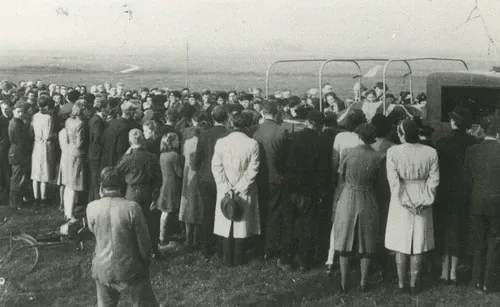
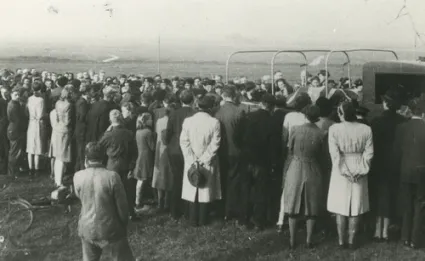
After a brief but heavy shelling from the Canadians as a warning, a mediator was sent to the island the next day. The highest-ranking SD officer refused to surrender. They were waiting for an escape with a Schnell boat that was to take them to the German Wadden island of Borkum on 3 May. That turned out to be in vain, but in the meantime they kept the island occupied, even after the general capitulation of the whole of the Netherlands on 5 May.It was not until 11 June that two boats, the MS Waddenzee and the MS Brakzand, transported the last occupiers of Schiermonnikoog to the port of Oostmahorn. A column of army trucks packed with prisoners of war left the port under the guard of the Allies. From there they went to the POW camp in Beerta (Groningen).
-
-
Sneek (Snits)
Sneek (Snits)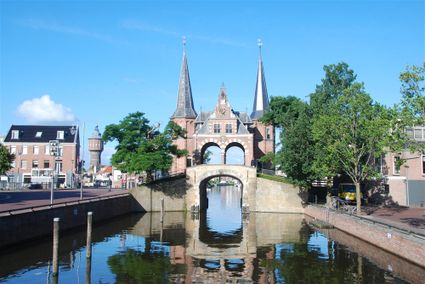
-
Noarderleech Visitor Centre
Noarderleech Visitor Centre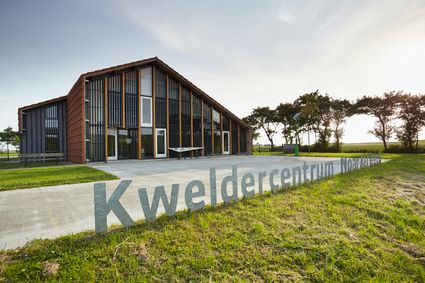

-
Ypeymolen
Ypeymolen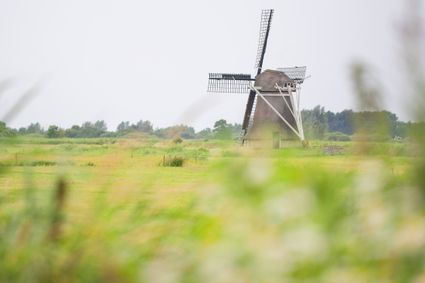
-
Campsite Tjaerda State
Campsite Tjaerda State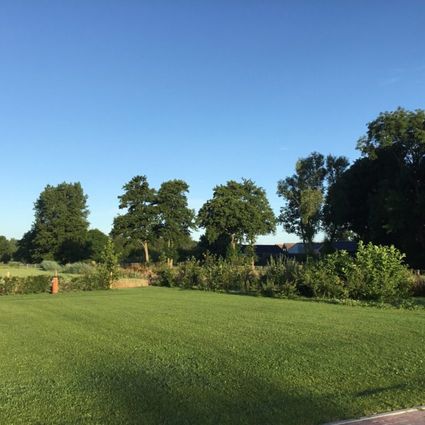
-
Klein Humalda
Klein Humalda
-
National Park 'De Alde Feanen'
National Park 'De Alde Feanen'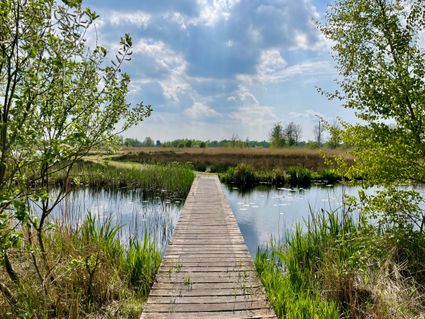
-
De Babbelaar Café in Burgum
De Babbelaar Café in Burgum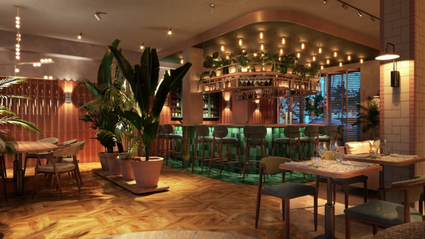
-
the guesthouse
the guesthouse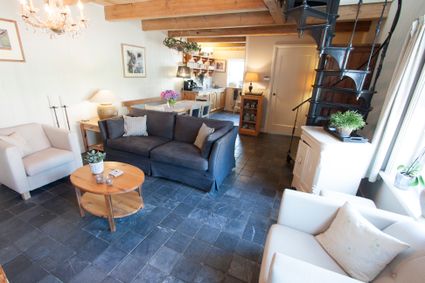
-
It Lytse Slot Manor
It Lytse Slot Manor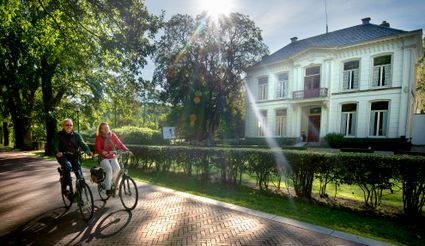
-
Museum 't Fiskershuske
Museum 't Fiskershuske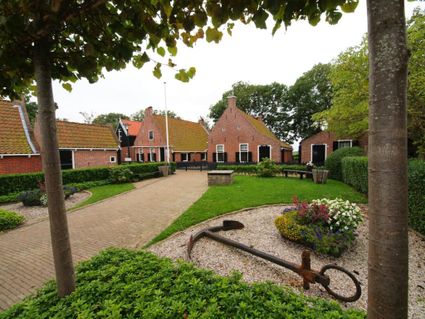
-
Campground Achterom
Campground Achterom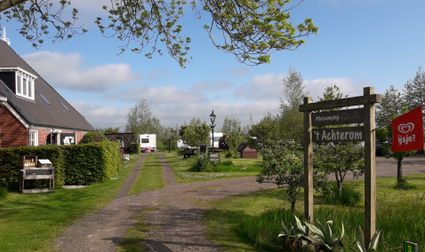
-
Eleven Cities Tour sculpture Aukje near Dokkum
Eleven Cities Tour sculpture Aukje near Dokkum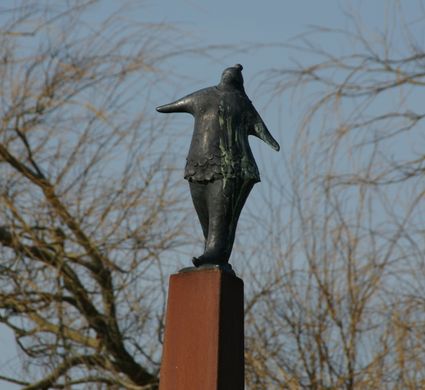
-
Landal Waterpark De Alde Feanen
Landal Waterpark De Alde Feanen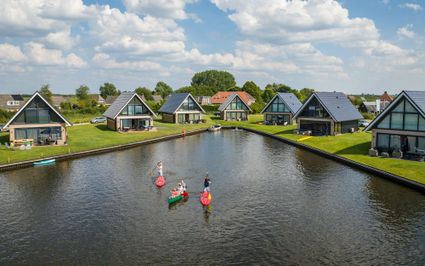
-
Wadlopen Friese Wad - mudflat hiking
Wadlopen Friese Wad - mudflat hiking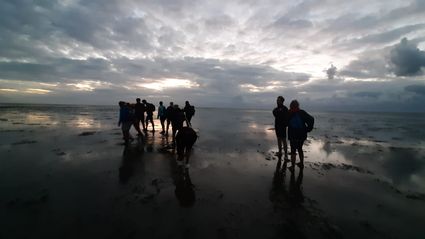
-
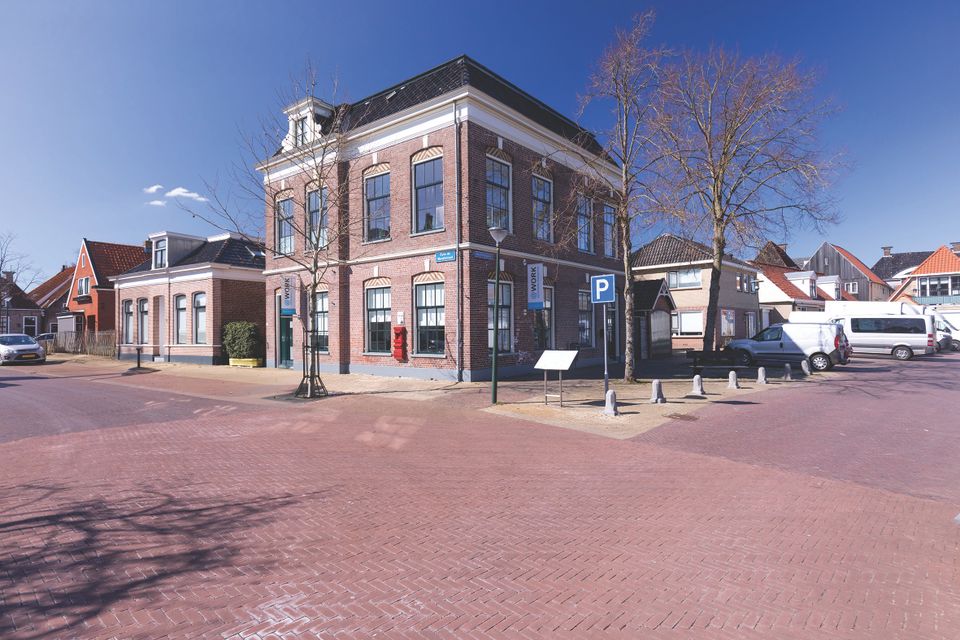
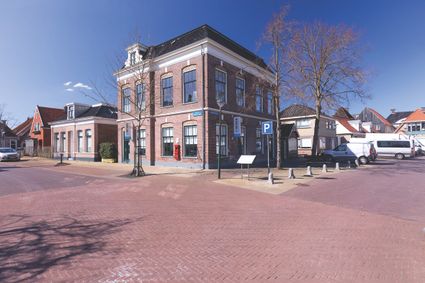
Former Post Office Kollum
Former Post Office Kollum
Although this building is now home to a business, it is well worth taking a look inside this former post office.
Those who look closely can still spot the remains of the old post office within the current premises. The original wooden service counters have been preserved, while the bright red PTT letterbox outside is a reminder of days gone by.
Today it is hard to imagine, but for centuries the postal service was one of the most important means of communication. This main post office was built in 1888 for that purpose. It is one of the few post offices constructed after 1883 that was not designed by the Government Architect for the Northern Netherlands, C. H. Peters, but most likely by the municipal architect H. A. Zondag. The municipality leased the building to the national government. The post office occupied the ground floor, while the postmaster lived upstairs. Following a renovation in 1908, the telegraph and telephone services were also housed here. The post office remained in use until the end of 1972.
-
-
Dekema State
Dekema State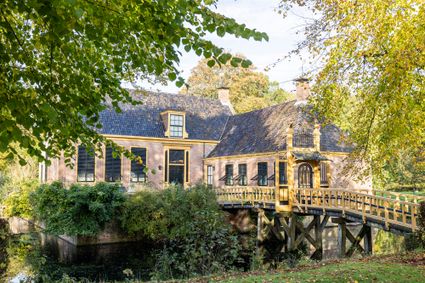
-
De Klinze Country House and Estate
De Klinze Country House and Estate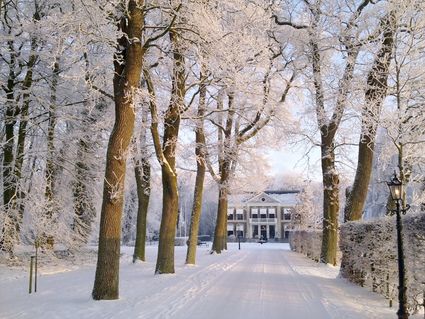
-
Age Veldboom Sailing Activities
Age Veldboom Sailing Activities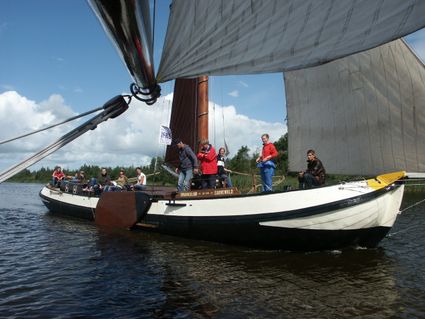
-
Veenkloosterbos Forest on Fogelsangh State Country Estate
Veenkloosterbos Forest on Fogelsangh State Country Estate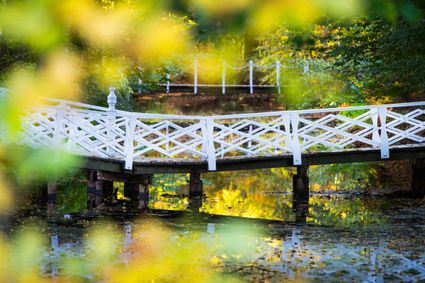
-
Former director’s house of the Mûnein Flax Factory
Former director’s house of the Mûnein Flax Factory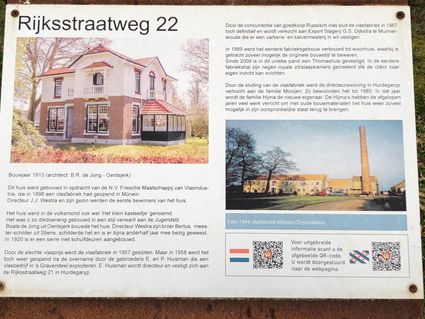
-
TOP Dokkumer Nieuwe Zijlen
TOP Dokkumer Nieuwe Zijlen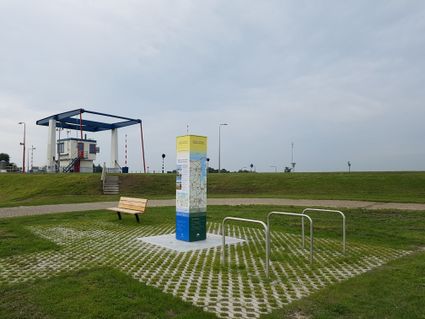
-
Bike Rental De Schreiershoek Dokkum
Bike Rental De Schreiershoek Dokkum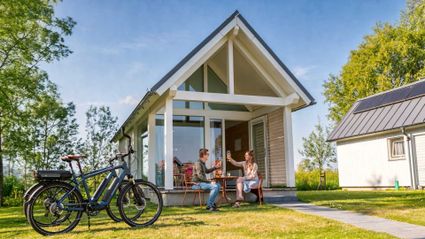
New
Dokkum / Oostrum -
TOP Trynwâlden
TOP Trynwâlden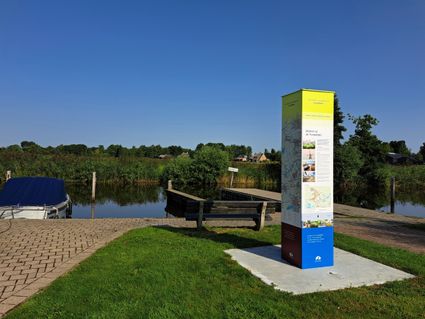
-
Mill de Swarte Prinsch
Mill de Swarte Prinsch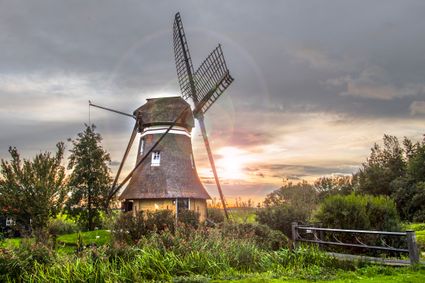
-
Skrins - Bird watching cabin
Skrins - Bird watching cabin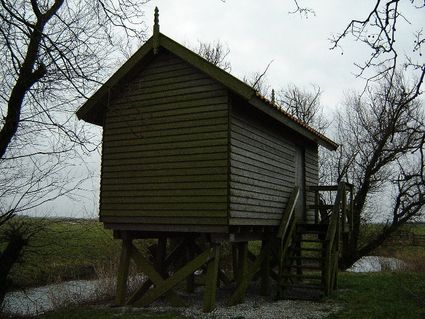
-
Vakantiewoning Holwerd
Vakantiewoning Holwerd
-
VIJFHUIZEN AIRMAIL
VIJFHUIZEN AIRMAIL
-
Statue of Tryntsje and her seven sons
Statue of Tryntsje and her seven sons
-
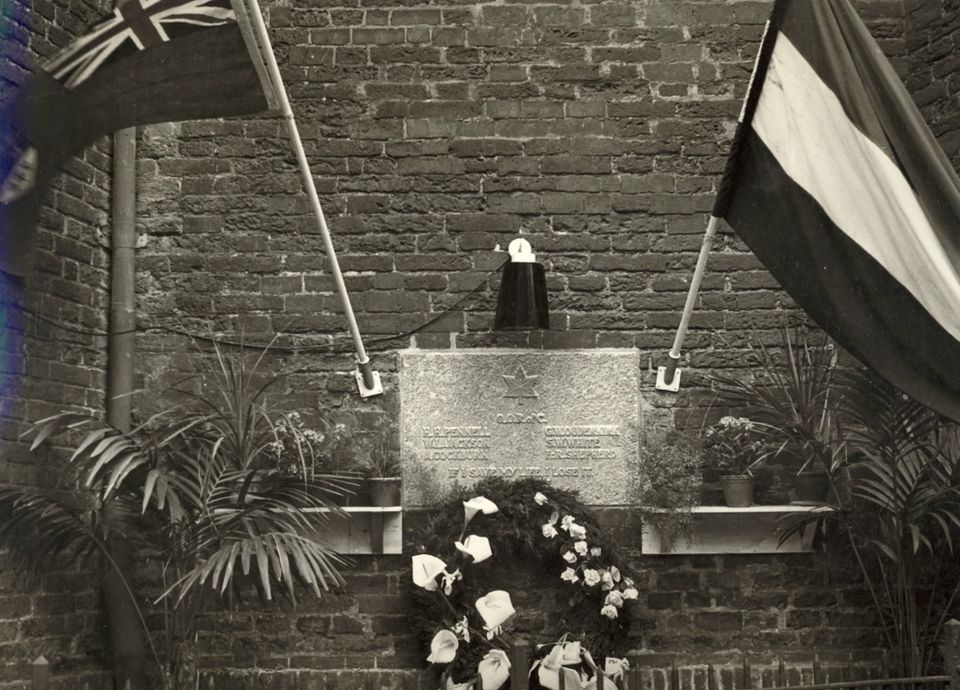
Memorial stone for Fallen Canadians
Memorial stone for Fallen Canadians
Sunday 15 April 1945, Friesland's official liberation day, was also the day Sneek welcomed the Canadian liberation forces. It had been an exciting day, and the Dutch Domestic Armed Forces (NBS) had fought quite a battle with the occupiers.
A day earlier, German troops had begun to withdraw from Sneek and the NBS had tried to hinder their retreat along the Leeuwarderweg as much as possible. Until a column of German parachute troops had entered the fray and forced the NBS to retreat.
The Waag building in the middle of the city centre was used as a weapons cache by the occupying forces during the war. To prevent it from falling into Allied hands, the fleeing troops set it on fire at around three o'clock on Sunday. Loud explosions and bangs resounded throughout the city for half an hour.
Once the enemy had left the city, the NBS operatives gathered at the HBS school for instructions and the distribution of weapons and armbands. They went into the city to round up traitors. Then, rumour had it that hundreds of German soldiers were on their way to Sneek from Lemmer. Immediately, fortifications were built at the Water gate.
Canadian units were alerted. They were now in possession of the latest defence plans for Sneek thanks to NBS intelligence and were advancing from Joure towards the town.
In the evening around half past seven, the first patrol of the Canadian infantry battalion Le régiment De La Chaudière rode into town with flame-throwers and machine guns. The German troops stayed away, and the full Canadian battalion followed.
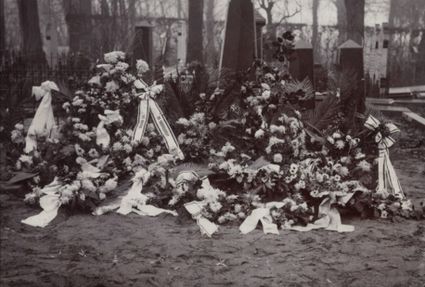
Sneek was liberated, but freedom was not yet guaranteed as German troops tried to escape via the Afsluitdijk towards Friesland. The Canadian Regiment of the Queens Own Rifles moved through Sneek to the Afsluitdijk and fiercely fought at Wons. Six Canadian soldiers were killed. They were temporarily buried at Sneek General Cemetery. In 1946, they were reburied at the Canadian Field of Honour in Holten.
Canadian guests
While waiting to return to their homeland, hundreds of Canadian soldiers were lodged with families in Sneek for about five months. On 1 June, the Perth Regiment arrived in the town, which they temporarily renamed Stratford. They were involved in the liberation of Groningen. A committee was set up to entertain the soldiers with various activities. From dances to sailing competitions and special church services.Cordial ties developed between the liberators and the people of Sneek. And sometimes more than that. For Gordon C. Compton and Atty Bouma, one could even speak of "love at first sight". When the last soldiers return home at the end of November, Gordon decided to stay in the Netherlands. On 9 May 1946, he married Atty in Sneek. Not long after, Gordon and his "war bride" left for Canada.
Several monuments in the city recall the special bond with the Canadian military, which remains very close to this day.
-
-
Bootverhuur Bonkevaart
Bootverhuur Bonkevaart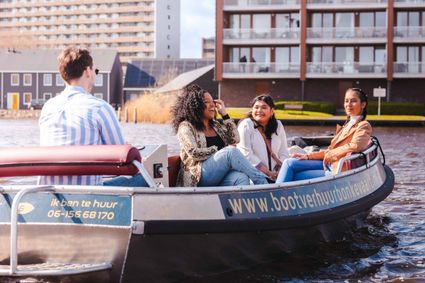
-
De Dikke Draai
De Dikke Draai